
Everything on One Chip
We don't make neural interfaces. We make complete brain-computer interface systems.
65,536
recording channels
1,024
simultaneous recording channels
16,384
stimulation channels
Custom Controller
for on-chip programability
Wireless Communication
uplink, 50 Mbps downlink
Wireless Power
no batteries needed
Real-time
big data from the brain
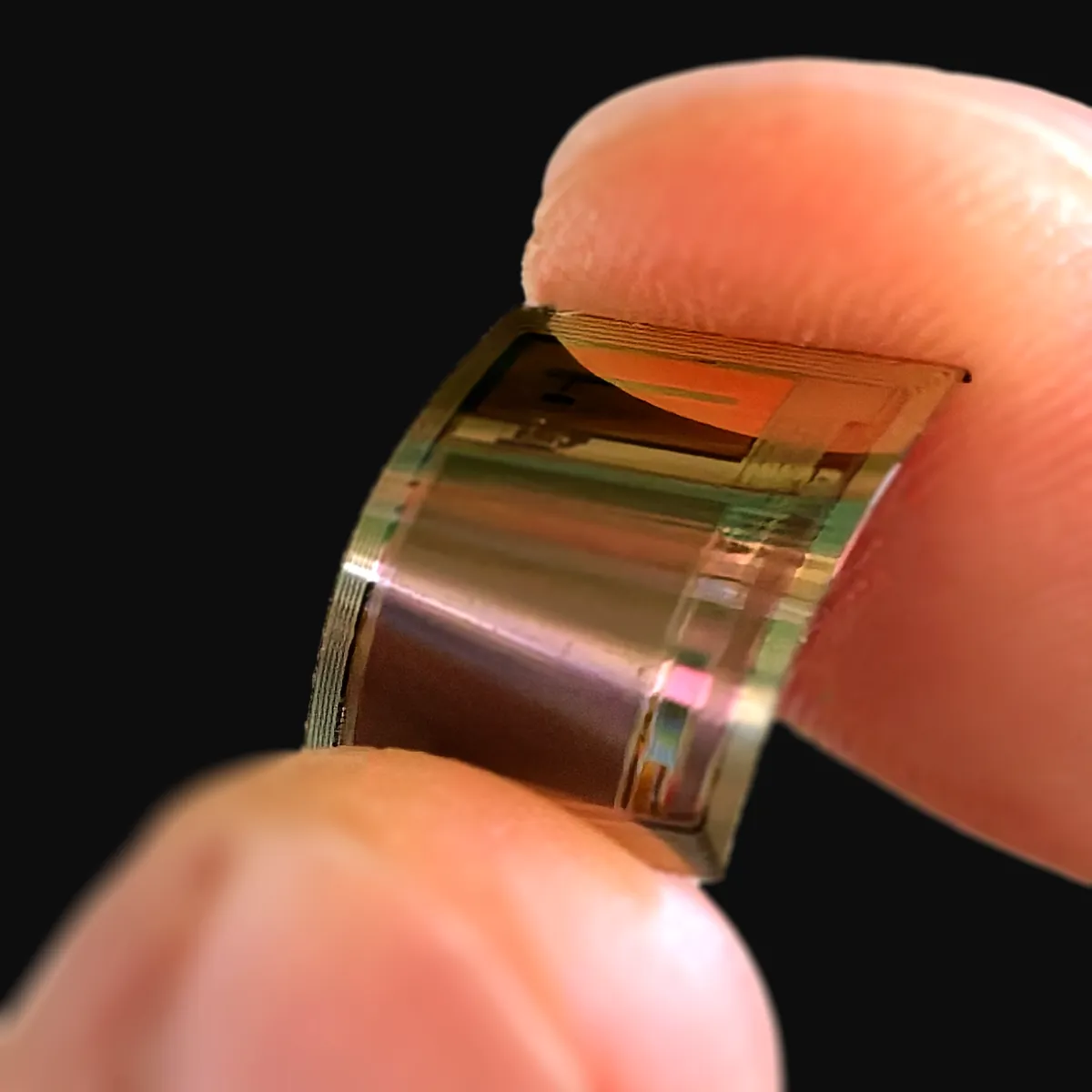
Silicon That Bends
By thinning our chips to <25 microns, silicon becomes flexible like paper while maintaining full functionality.
Conforms to brain curvature
Moves with the brain
Enables chronic stability
Optimal Placement
We place our system under the dura matter for high signal quality and biocompatibility with no potential for damage to cortical tissue.
Direct cortical contact
Protected environment
Better tissue integration

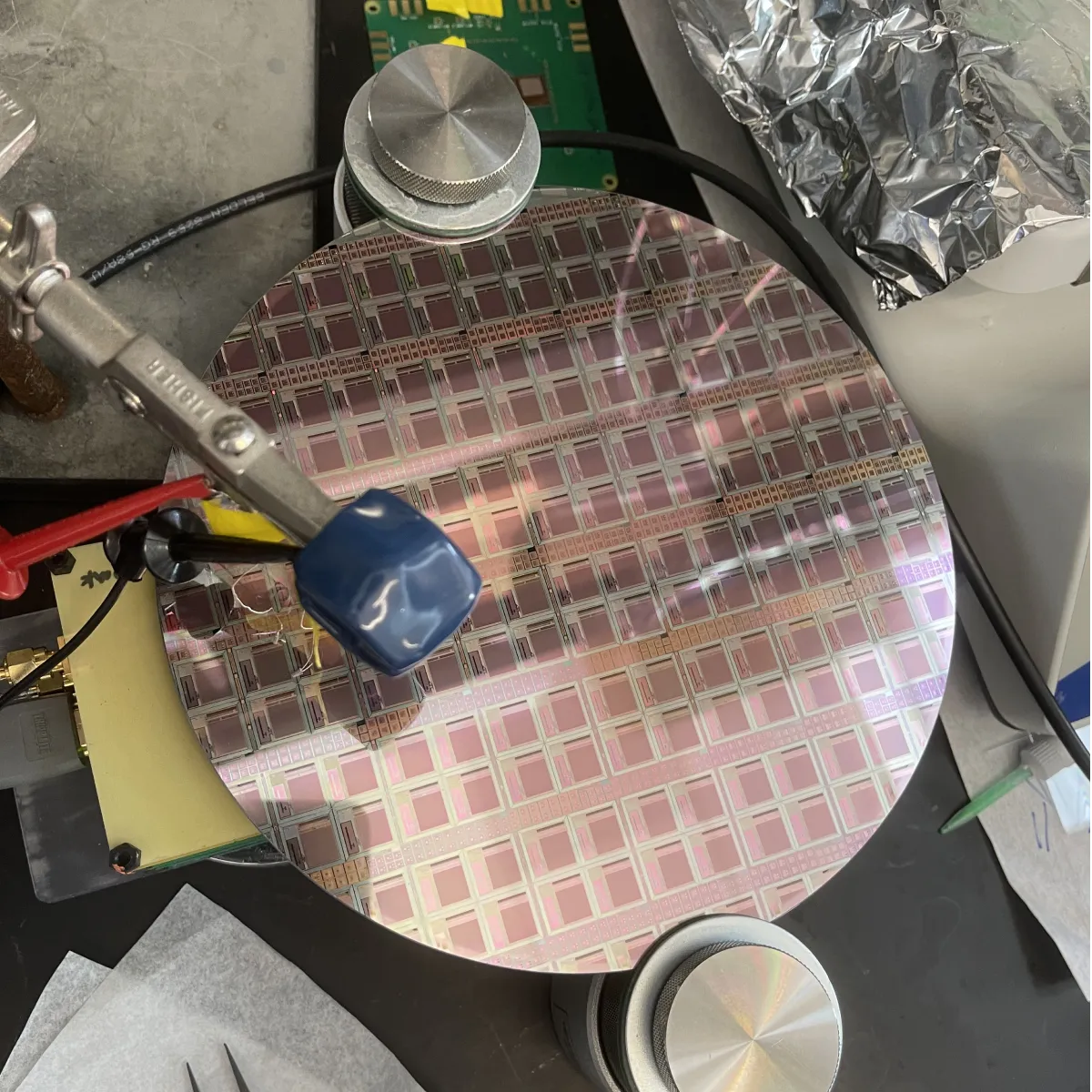
Scalable Chips on the Brain
The implanted chip is fabricated in the same way that NVIDIA and Apple fabricate their chips. Proprietary "post-processing" manufacturing flow at the wafer scale makes these chips implant-ready.
High Yield
Consistent quality
Scalable production
Enabling Tomorrow's Therapies

Recording
- 1,024 channels @ 8kHz and 256 channels @ 32kHz
- 10 bit resolution
- <5 μV rms noise

Stimulation
- 16,384 stimulation channels
- Current amplitude control
- Configurable waveforms
Wireless
- 100 Mbps data uplink bandwidth
- 50 Mbps data downlink banwidth

System
- No implanted battery
- Continuous operation
- Complete on-chip integration
Built for Artificial Intelligence
Our channel count and bandwidth enable unprecedented large-scale brain data to train advanced AI models and support accurate BCI applications
Platform Capabilities
1,024 parallel channels out of the 65,536 total available channels
Months of consistent signal quality
Real-time Python APIs
Edge computing on-chip

Enabling
Highly accurate AI-based neural decoders
Predictive biomarker detection
Closed-loop therapeutic algorithms
Programmable stimulation patterns